
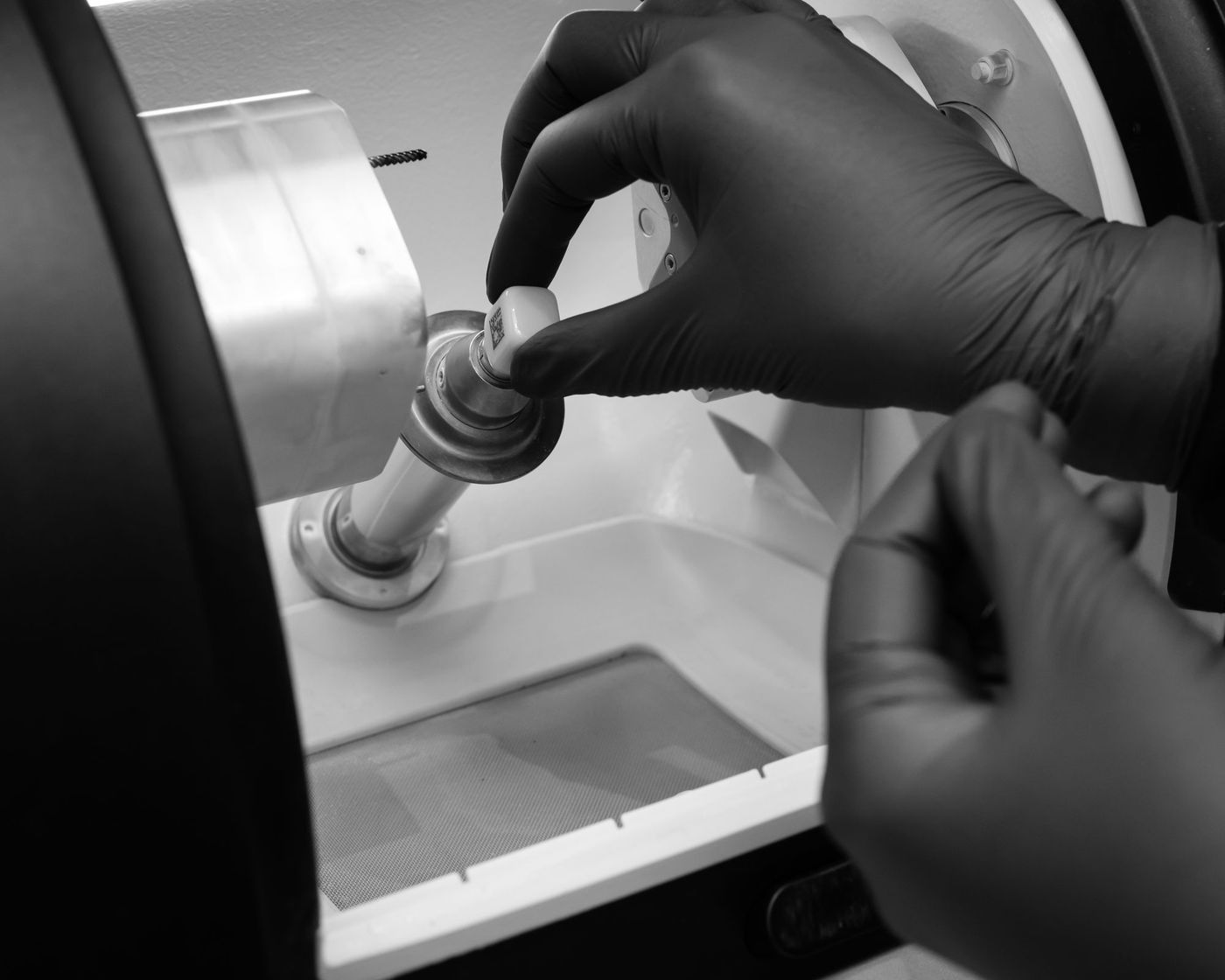
Same-day crowns, designed and made here
Where a tooth is suitable, it can be scanned, designed, milled and bonded in a single appointment, using a digital scan in place of conventional impression trays.
When a crown may be recommended
A crown covers the visible part of a tooth above the gum and can help protect what remains underneath.
A crown may be recommended when a tooth is badly damaged or has limited remaining structure, including after some root canal treatments. The choice depends on the tooth, your bite and whether a smaller restoration would be suitable.
We generally recommend a crown only when a smaller repair is unlikely to hold, and we aim to preserve as much healthy tooth structure as we can.
How same-day crowns work here
Where a tooth is suitable, treatment can often be completed in one appointment, with time in the waiting room while the crown is made. Not every tooth can be treated this way, and we will say so after examining it.
- A digital scan of your tooth replaces the traditional impression
- The crown is designed on screen to suit your tooth and bite
- Our in-house mill makes the ceramic crown while you wait
- It is checked, adjusted if needed, and bonded the same day
What digital design changes
Designing the crown digitally allows the fit at the margin to be checked and refined on screen before it is made. Where the crown is made and fitted the same day, there is no temporary crown in the interim and no lengthy laboratory turnaround time.
The ceramics we use are chosen to suit the shade and translucency of your own teeth. As with any restoration, the outcome depends on the individual tooth and how much of it remains.
Looking after a crown
A crowned tooth still needs brushing, cleaning between the teeth and regular check-ups. Decay and gum problems can still develop at the margin where the crown meets the tooth.
Crowns placed on natural teeth and crowns placed on implants are not the same thing. An implant crown follows a separate pathway, with its own planning, timing and maintenance, and we would explain that separately.
Risks and limitations
As with any dental treatment, there are risks. Preparing a tooth for a crown removes some tooth structure, and the tooth may be sensitive afterwards or, in some cases, need root canal treatment later. Ceramic crowns can chip or crack, and a crown may eventually need to be replaced. Your dentist will explain the risks, alternatives and costs for your tooth before you decide.
You may also want to read
Need a tooth restored?
Call us and describe what's happened, and we'll arrange a time to examine the tooth. Whether a crown is needed, and whether it can be done in one visit, is decided after that examination.
Call 03 5989 2144