
Root canal or extraction: how to decide
When a tooth is badly decayed or infected, treating the inside of the tooth and removing the tooth are both possibilities. Which is appropriate depends entirely on the tooth and on your circumstances.
What a root canal actually does
Root canal treatment removes the inflamed or infected tissue from inside the tooth, cleans and seals the canals, and the tooth is then restored with a crown or another restoration, depending on the tooth. The aim is to keep the tooth in place so it can continue to function.
Root canal treatment is normally carried out under local anaesthetic. Experiences differ between people and between teeth, and as with any treatment there are risks and no guaranteed outcome; your dentist will go through these with you.
When extraction may be the better option
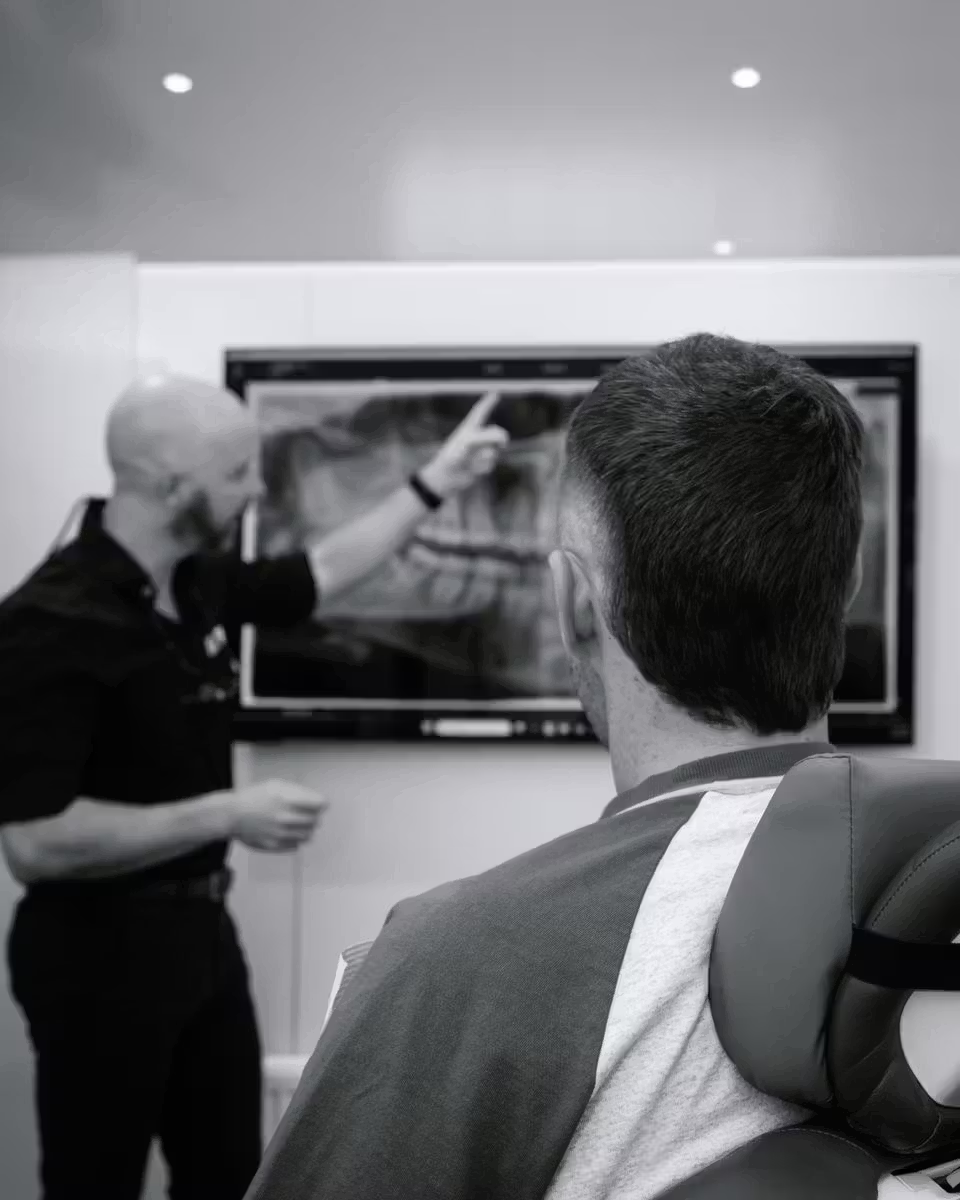
Sometimes a tooth cannot be restored, for example where it is split, where too little sound tooth remains above the bone, or where the surrounding support has been lost. Whether a particular tooth can be saved is an individual judgement, made after examining it and usually after an X-ray. Removal may also be recommended for some impacted wisdom teeth, and occasionally to create space for orthodontic treatment.
Where a tooth does need to come out, it is normally done under local anaesthetic. Afterwards there is usually some swelling, tenderness and bleeding, and less common problems such as a dry socket or delayed healing can occur. We explain what to expect and how to look after the area before you decide.
Root canal treatment does not always settle the problem first time either. Where disease persists, further treatment or referral may be needed.
What happens after extraction?
Once a tooth is out, the space can be left as it is or the tooth can be replaced, usually with an implant, a bridge or a denture. Each option differs in what is involved, what it costs and the care it needs.
Leaving a gap is sometimes a perfectly sensible decision, particularly towards the back of the mouth. In other cases neighbouring teeth drift, the opposing tooth over-erupts and the bite changes, so replacement is worth considering. We set out both, and the decision is yours.
Four things worth knowing
- A root-filled tooth needs to be restored and looked after, and outcomes vary from tooth to tooth
- Extraction is usually quicker, but not necessarily less costly over time
- Both are normally carried out under local anaesthetic
- Delay can allow an infection to progress and narrow the options
In pain right now?
Call us and tell us what's happening. We'll aim to see you as soon as we can, help manage your pain, and explain both options before you decide.
Call 03 5989 2144We're open Monday to Friday, 8am – 5pm. Outside these hours, see our after-hours advice.